Google Docs is a widely used document management tool that integrates naturally with other Google services. When your team creates or updates documents in Google Docs, that content often needs to be reflected in your Document360 knowledge base. By connecting Google Docs and Document360 through Make, you can automate this: whenever a new document is created or modified in a specified Google Drive folder, Make automatically creates a corresponding article in Document360.
When to use this integration
- Your team drafts content in Google Docs before publishing it to Document360, and you want new or updated documents to automatically generate draft articles in your knowledge base without a manual transfer step.
- You maintain a shared Google Drive folder as a content staging area and want Make to watch it and push new documents into Document360 as articles on a regular schedule.
- You want to keep your Google Docs library and Document360 knowledge base in sync, reducing the time between content creation and publication.
Before you begin
- You must have an active Make account.
- You must have a Google account with access to the Drive folder you want to monitor.
- You must have your Document360 API token ready. To generate one, navigate to Connections > Extensions , locate the Make tile, and click Connect to copy the token.
Set up the Scenario
Step 1 — Sign in and create a new Scenario
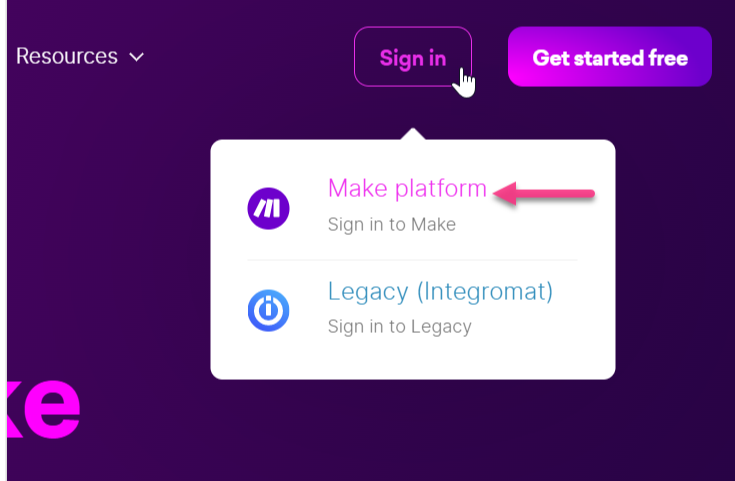
- Log in to your Make account. The Make dashboard appears.
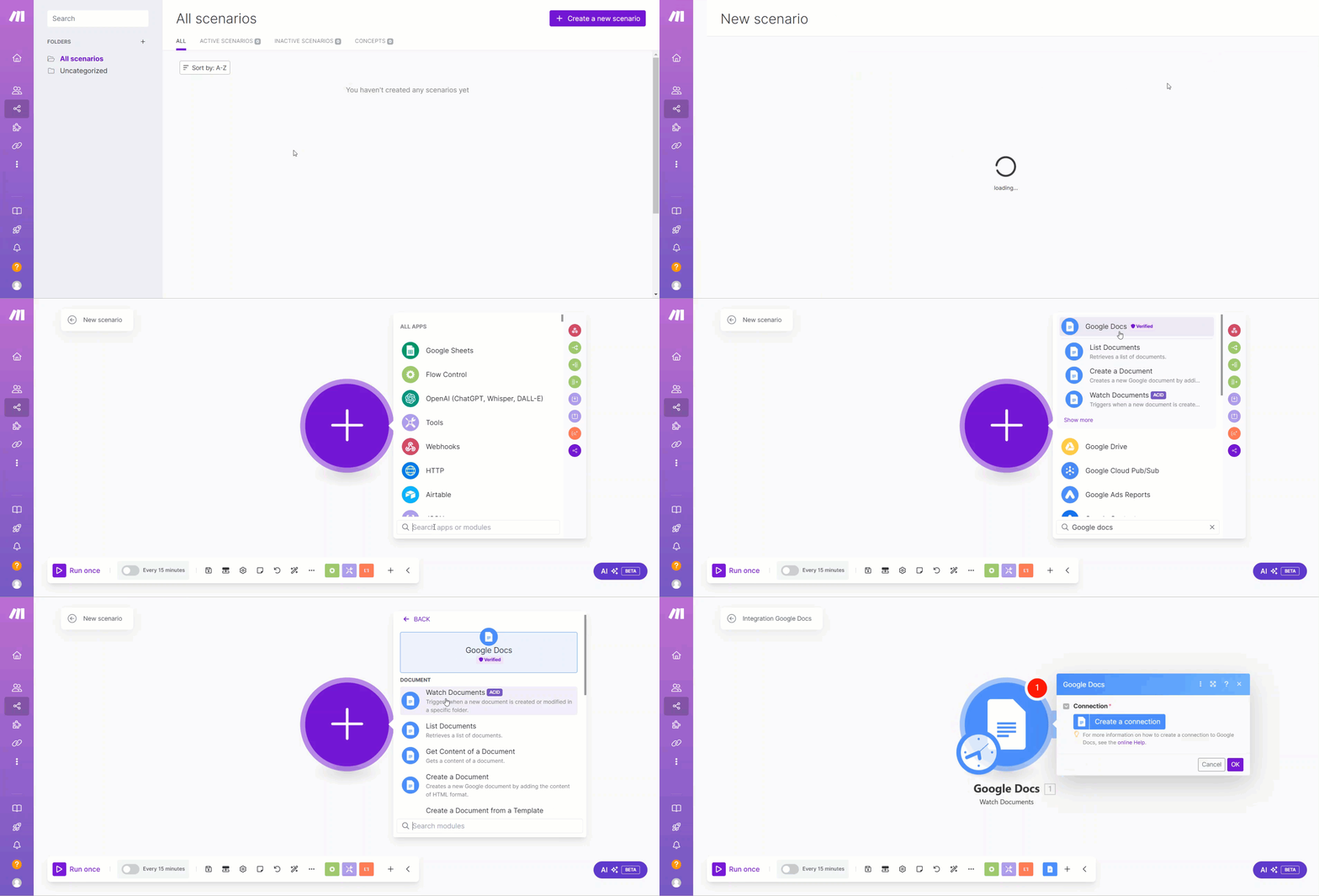
- Click Create a new scenario at the top right.
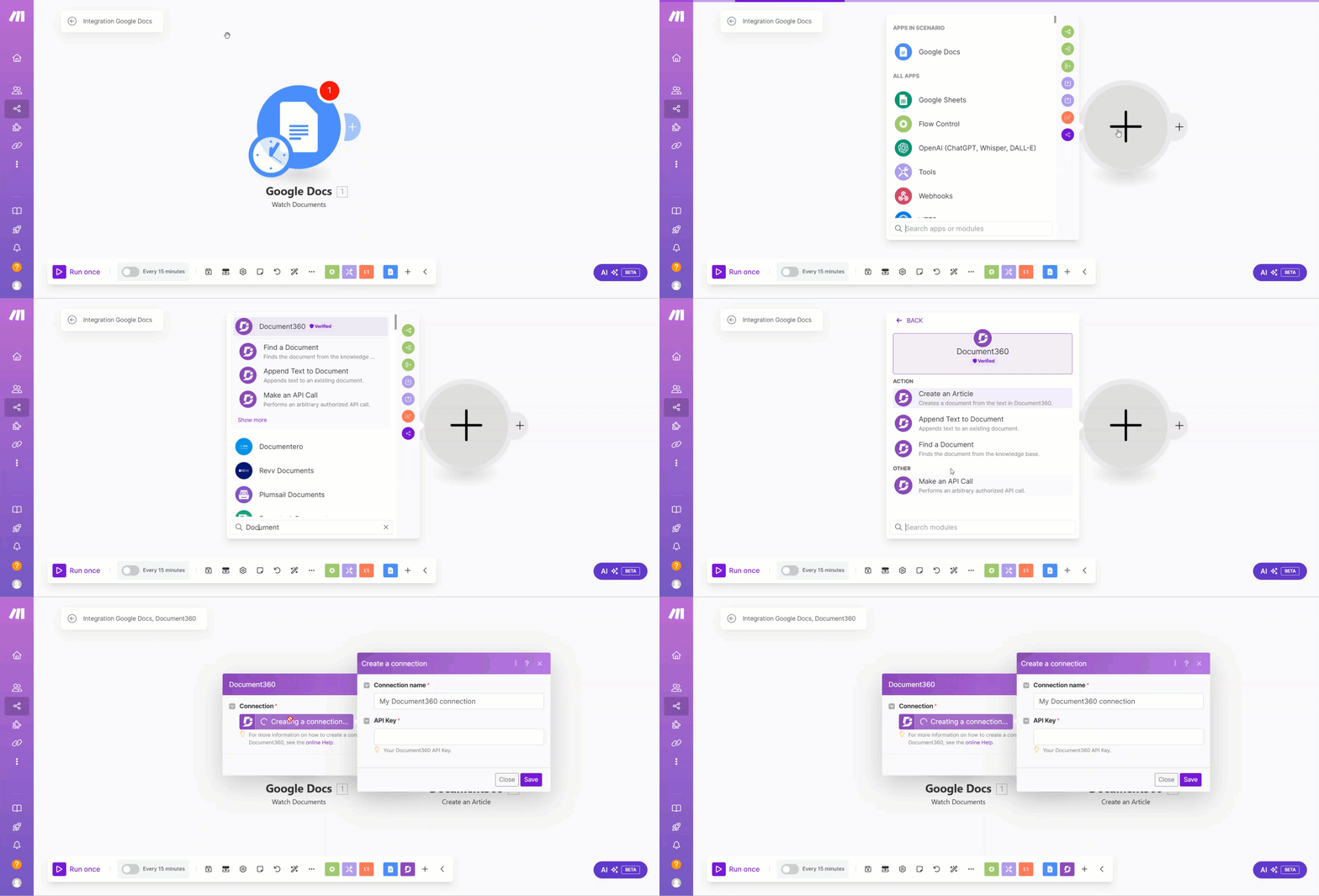
- Click the add (+) icon — a list of available applications appears.
- In the Search field, type Google Docs.
- Select Google Docs and choose the trigger you want to use. For example, select Watch documents to monitor new or updated documents in a Drive folder.
Step 2 — Configure the Google Docs module
Connect your Google account and configure which documents to watch.
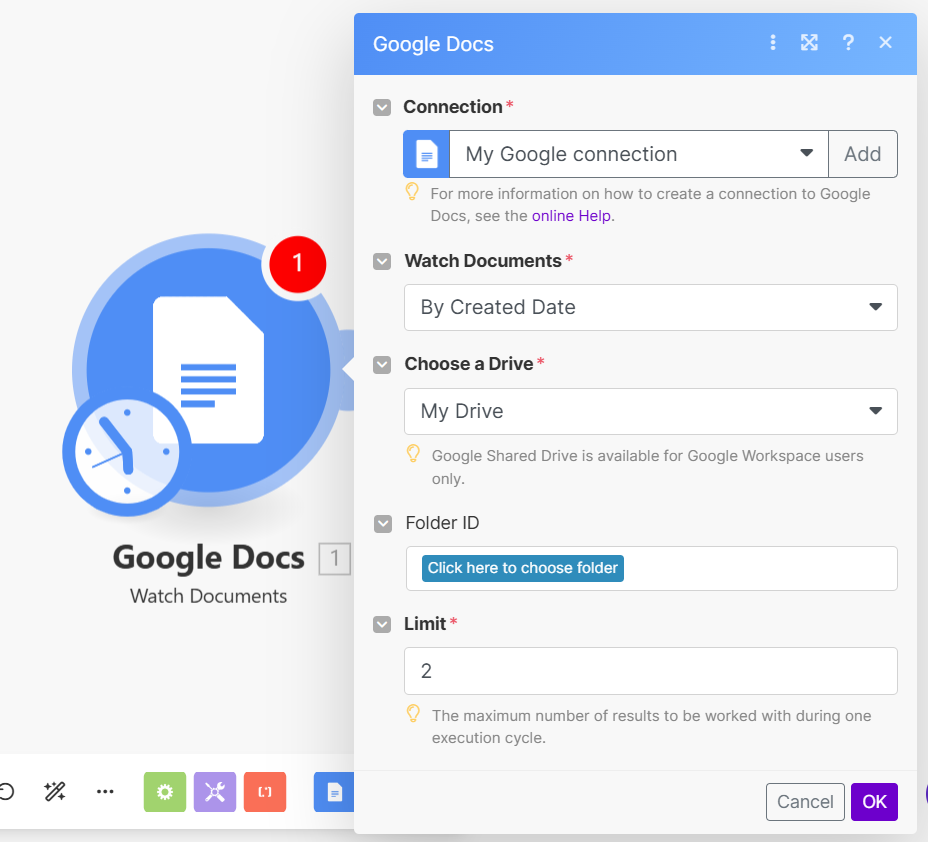
- Click Create a connection and enter a Connection name, or select an existing connection from the dropdown if you have one already.
- From the Watch Documents dropdown, select either By Created Date or By Modified Date depending on what should trigger the Scenario.
- From the Choose a Drive dropdown, select the Drive folder you want to monitor.
- In the Folder ID field, select the specific folder where your documents are stored.
- In the Limit field, enter the maximum number of documents Make will return per execution cycle.
- Click OK to save.
Step 3 — Connect Document360 as the action
Once Google Docs is connected, add Document360 as the next module in the Scenario.
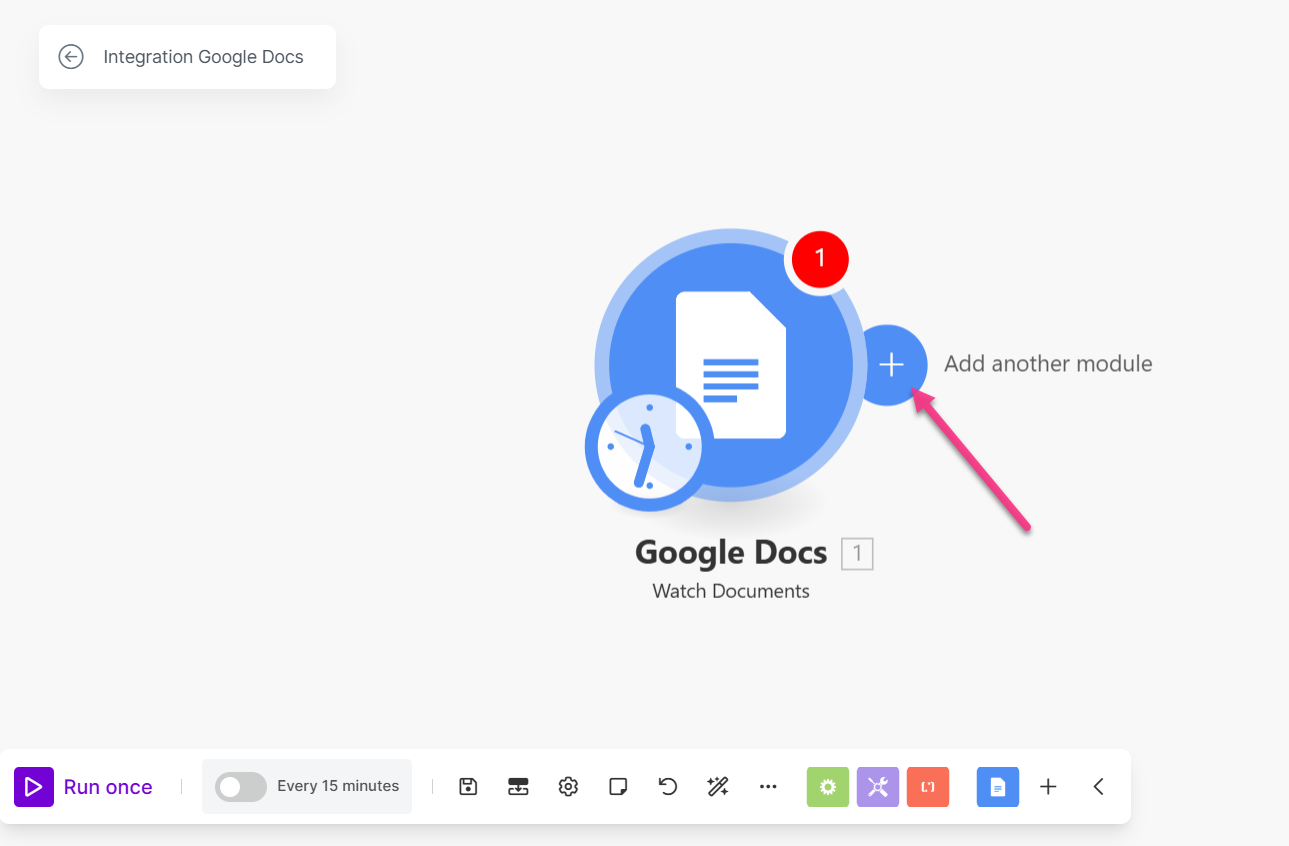
- On the Scenario editor page, click the Add another module (+) option.
- In the Search field, enter Document360.
- Select Document360 and choose the action you want to perform. For example, select Create an article to create a draft article.
- In the Document360 panel, select an existing connection. To create a new connection:
- Click Create a webhook and enter a webhook name.
- Click Create a connection and enter a Connection name.
- Enter your Document360 API token and click Save.
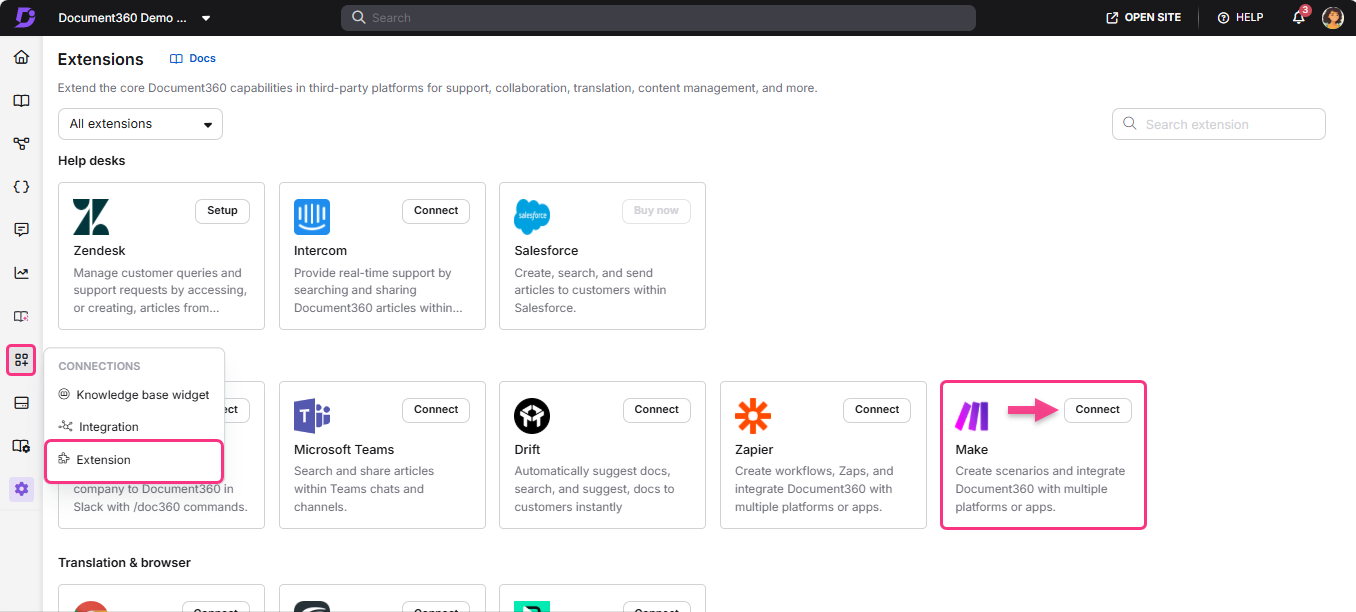
To generate the API token from Document360:
- Navigate to Connections > Extensions in the left navigation bar of the Knowledge base portal.
- On the Make extension tile, click Connect.
- Click the Copy icon to copy the token.
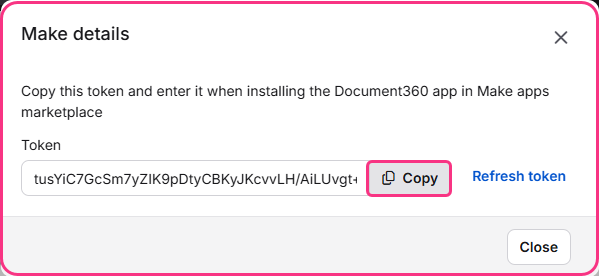
- Head back to the Make panel and paste the API token into the field.
Step 4 — Test the Scenario
- Click the Run once button at the bottom left to test the Scenario. Test details appear at the bottom of the page.
- To trigger the test, create a new document in the associated Google Docs folder.
- Once the document is created, a new article is created in the associated Document360 category. You can verify this in the test details panel or by navigating directly to your Document360 project.
Step 5 — Schedule the Scenario
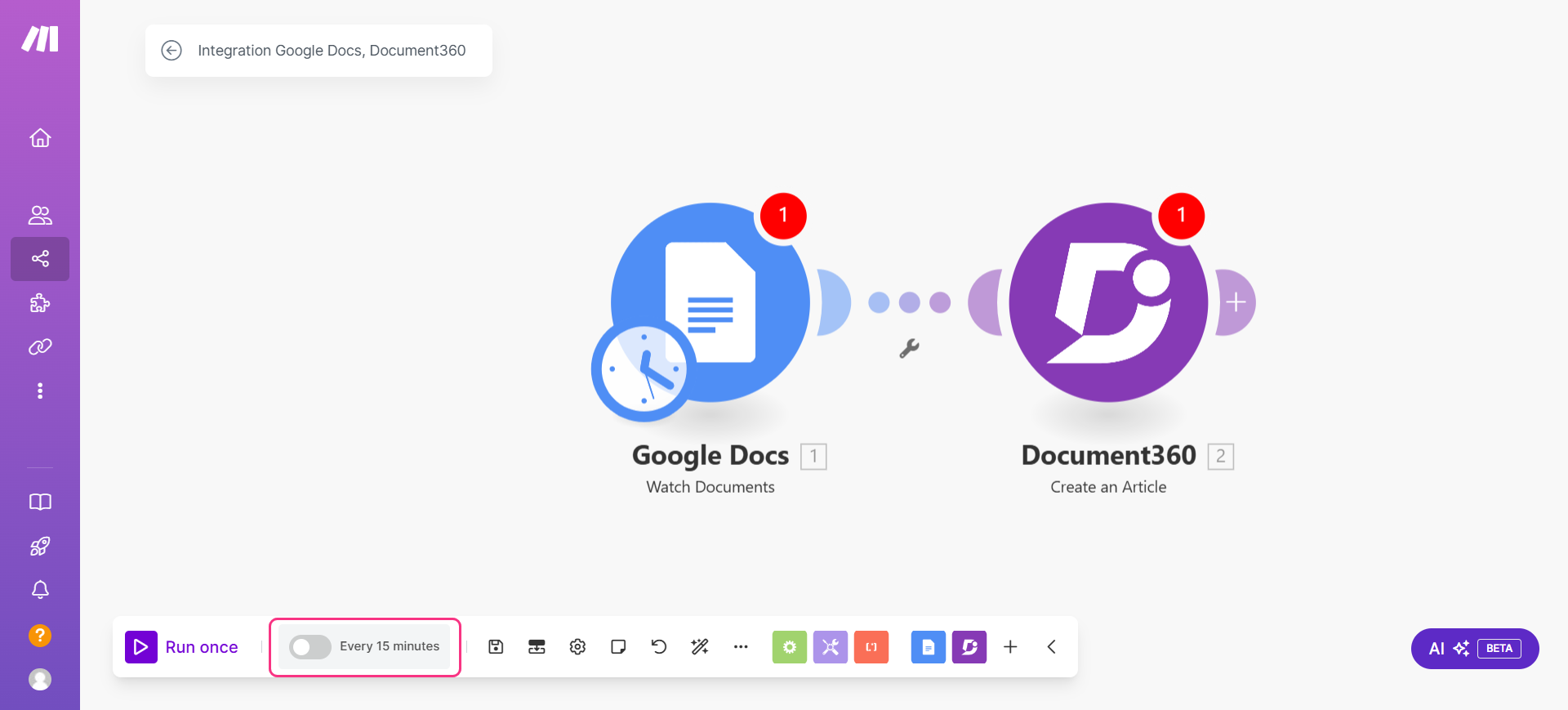
- Enable the toggle at the bottom left to schedule the Scenario. By default, this runs the Scenario every 15 minutes.
- Click OK to save.
Step 6 — Activate the Scenario
- Click the Exit editing () icon at the top. The integration dashboard appears.
- Turn on the ON/OFF toggle near the Edit option to activate the Scenario.
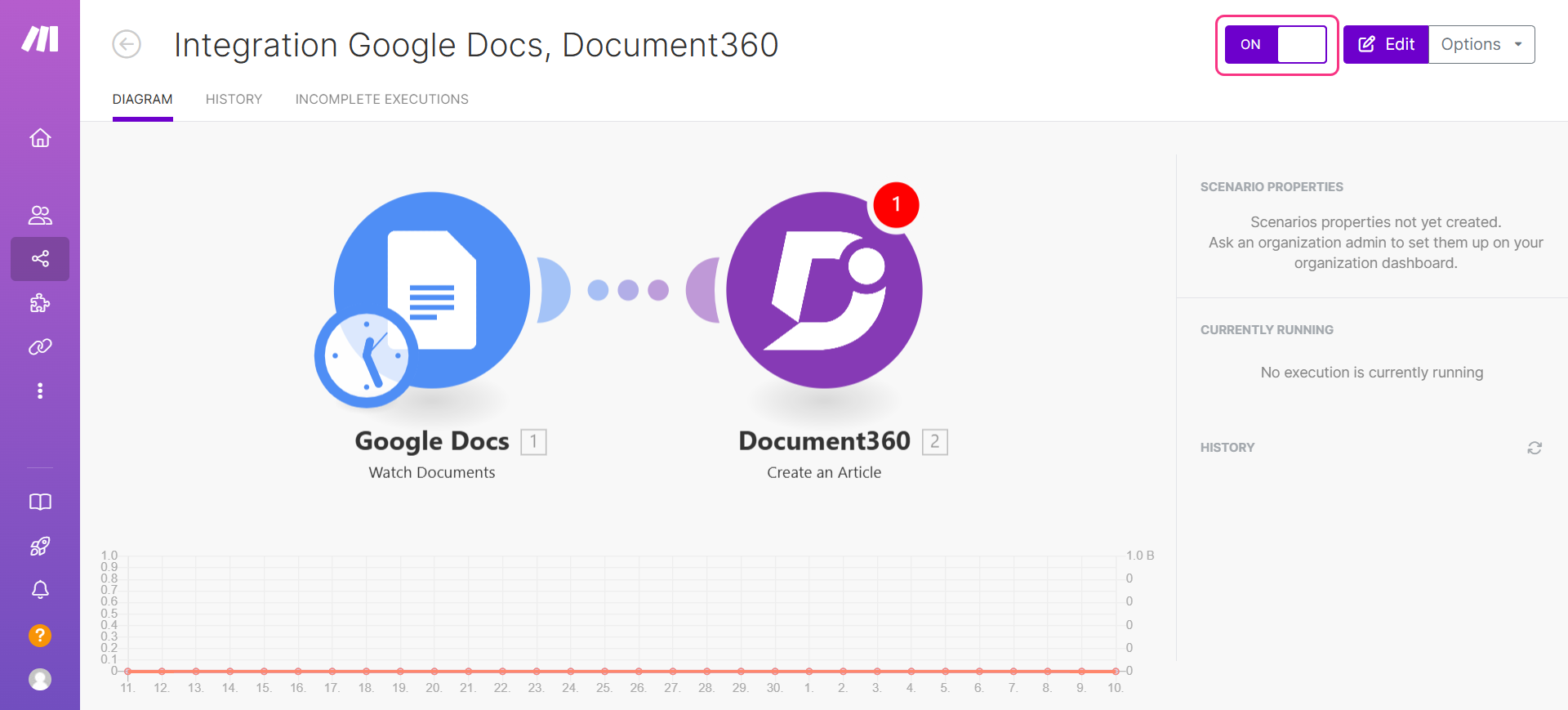
Once activated, the Scenario runs automatically every 15 minutes and creates articles from new or updated Google Docs documents.
Best practices
- Choose By Created Date in the Watch Documents dropdown if you want the Scenario to trigger only on brand-new documents. Use By Modified Date if you want updates to existing documents to also generate new articles — but be aware this may create duplicate articles for the same document over time.
- Scope the Folder ID to a specific staging folder rather than your entire Drive. A dedicated "Ready for Document360" folder gives your team a clear handoff point and prevents the Scenario from picking up unrelated documents.
- Use the Limit field conservatively when first activating the Scenario. Starting with a low limit lets you verify that the correct documents are being picked up before scaling up to larger batch sizes.