YouTube Shorts can be embedded in your articles using an HTML iframe. Although YouTube does not currently provide a direct embed option for Shorts, you can display them by modifying the video URL, replacing /shorts/ with /embed/, and inserting it into an iframe. This gives you full control over the dimensions, border, and styling of the embedded video.
When to use this technique
- Embedding short-form video content: display product walkthroughs, quick tips, or announcements created as YouTube Shorts directly within your articles.
- Supplementing written steps with video: embed a Shorts video alongside a procedure to give readers a visual walkthrough without leaving the page.
YouTube does not currently offer a native embed option for Shorts. This workaround works by replacing shorts with embed in the video URL. If YouTube adds official Shorts embedding in future, that method should be used instead.
How to embed a YouTube Short
-
Go to YouTube and open the Shorts video you want to embed.
-
Copy the video URL using one of the following methods:
- Copy the URL from the address bar of your browser.
- Click Share > Copy.
-
Paste the copied URL into the
srcfield of the iframe code above. -
In the URL, replace
/shorts/with/embed/.For example:
Before: https://www.youtube.com/shorts/pVRefGmQDJM
After:  https://www.youtube.com/embed/pVRefGmQDJM
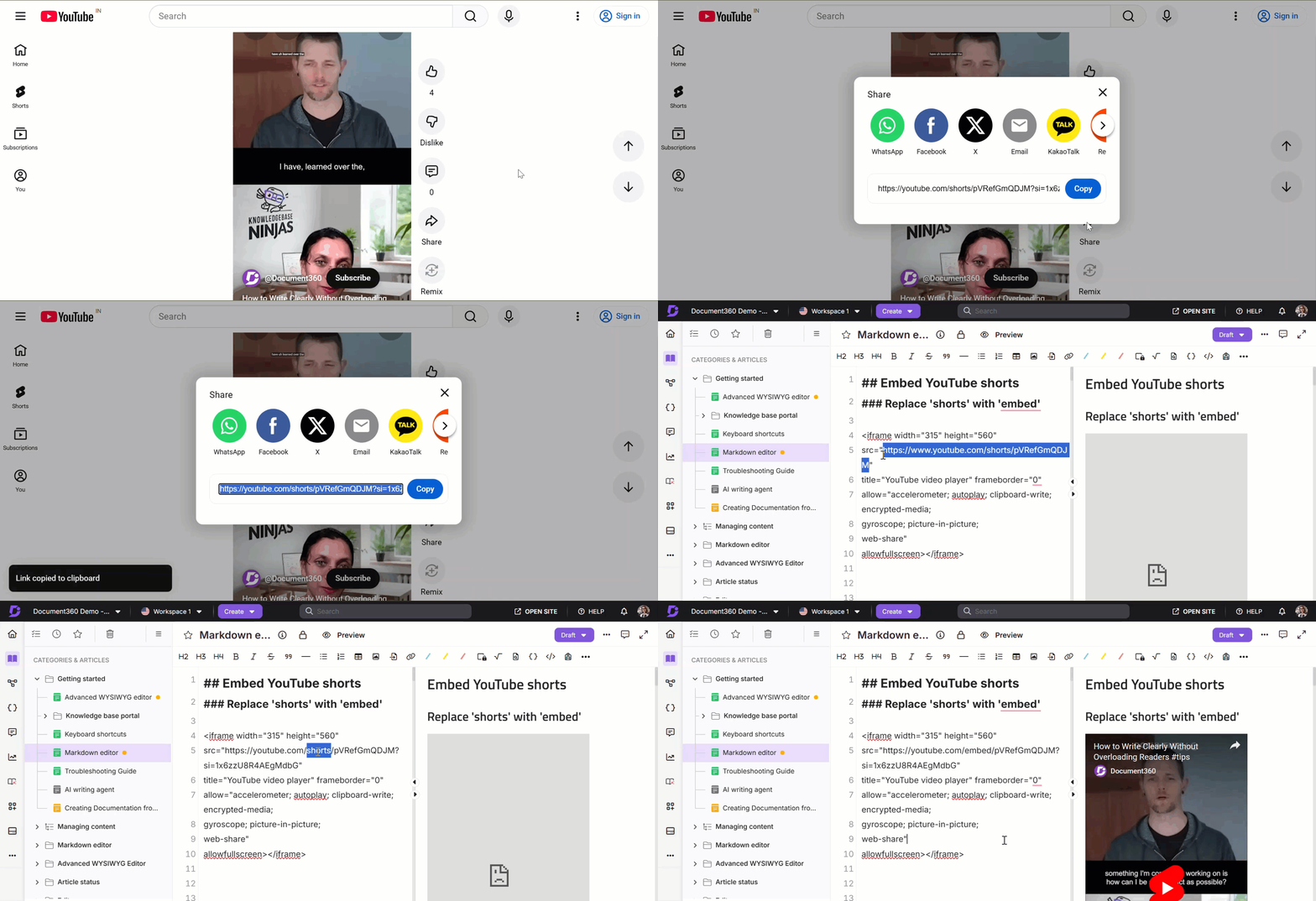
- Paste the completed iframe code into your article using the code view or HTML block.
Quick reference
Replace <Shorts_video_code> with your video's ID (the alphanumeric code at the end of the Shorts URL).
<iframe width="315" height="560"
src="https://www.youtube.com/embed/<Shorts_video_code>"
title="YouTube video player"
frameborder="0"
allow="accelerometer; autoplay; clipboard-write; encrypted-media; gyroscope; picture-in-picture; web-share"
allowfullscreen></iframe>
| Field | Default | Notes |
|---|---|---|
width |
315 |
Adjust as needed, maintain the aspect ratio |
height |
560 |
Optimal height for Shorts portrait format |
src |
Your video URL | Replace /shorts/ with /embed/ in the URL |
frameborder |
0 |
Set in pixels, 0 removes the border |
Example
Code:
<iframe width="315" height="560"
src="https://www.youtube.com/embed/pVRefGmQDJM"
title="YouTube video player"
frameborder="0"
allow="accelerometer; autoplay; clipboard-write; encrypted-media; gyroscope; picture-in-picture; web-share"
allowfullscreen></iframe>
Output:
Scope and coverage
| Item | Detail |
|---|---|
| Recommended size | 315px × 560px (portrait, matches Shorts 9:16 aspect ratio) |
| Custom sizes | Supported, adjust width and height, but maintain the 9:16 ratio |
| Editor support | Any editor that supports HTML iframe tags |
| Native embed option | Not currently available for YouTube Shorts |
Best practices
- Always maintain the 9:16 aspect ratio: Shorts are filmed in portrait format. If you resize the frame, keep the width-to-height ratio at 9:16 (for example, 270×480 or 360×640) to prevent the video from appearing stretched or cropped.
- Use
frameborder="0": setting the border to zero gives a cleaner look. If you want a visible border, use CSS on a wrapper<div>rather than theframeborderattribute, which is deprecated in HTML5. - Set
allowfullscreen: this attribute lets readers expand the video to full screen, which improves the viewing experience for content with small on-screen text or detail. - Test the embed before publishing: after inserting the iframe, preview the article to confirm the video loads correctly. If the video shows an error, double-check that
/shorts/has been fully replaced with/embed/in the URL. - Keep video titles descriptive: the
titleattribute on the iframe is read by screen readers. Replace"YouTube video player"with a descriptive title such as"Product setup walkthrough"to improve accessibility.