Google Tag Manager (GTM) is a tag management system that lets you add, update, and manage measurement codes and related code fragments (known as tags) on your website or mobile app without editing code directly. You can use GTM to manage tags for conversion tracking, site analytics, and remarketing all from one place.
Integrating GTM with Document360 lets you deploy and manage your analytics and marketing tags across your knowledge base site through your GTM account.
Before you begin
- You need a Google Tag Manager account.
- You need your GTM Container ID (begins with
GTM-). See How to find your GTM Container ID below.
Access your GTM Container ID
The GTM Container ID is a unique code obtained from Google Tag Manager. It is required to connect GTM with Document360.
Existing Google Tag Manager user
- In your GTM account, click Add new container, select Web from the Create Container panel, then click Install Google Tag Manager.
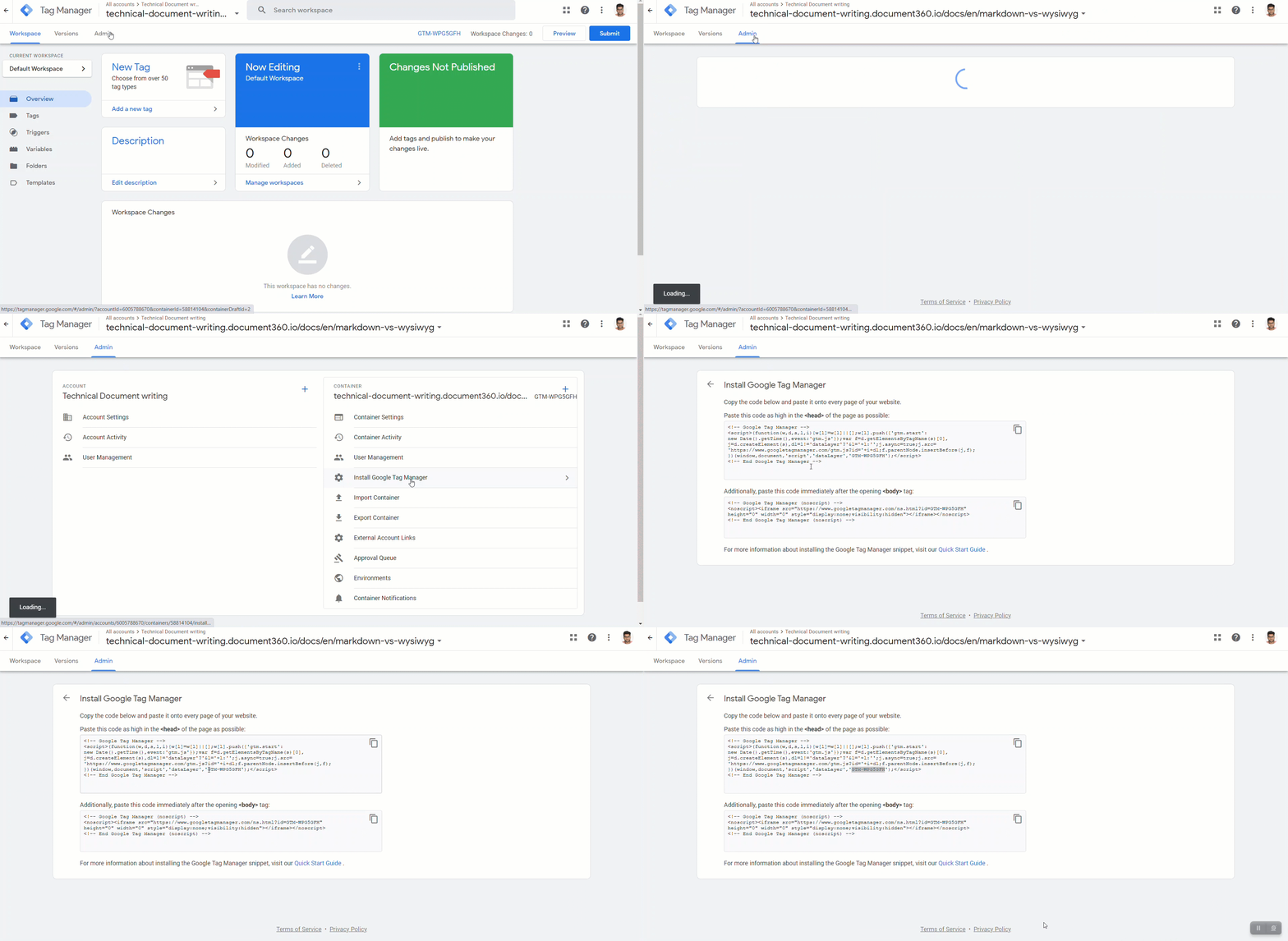
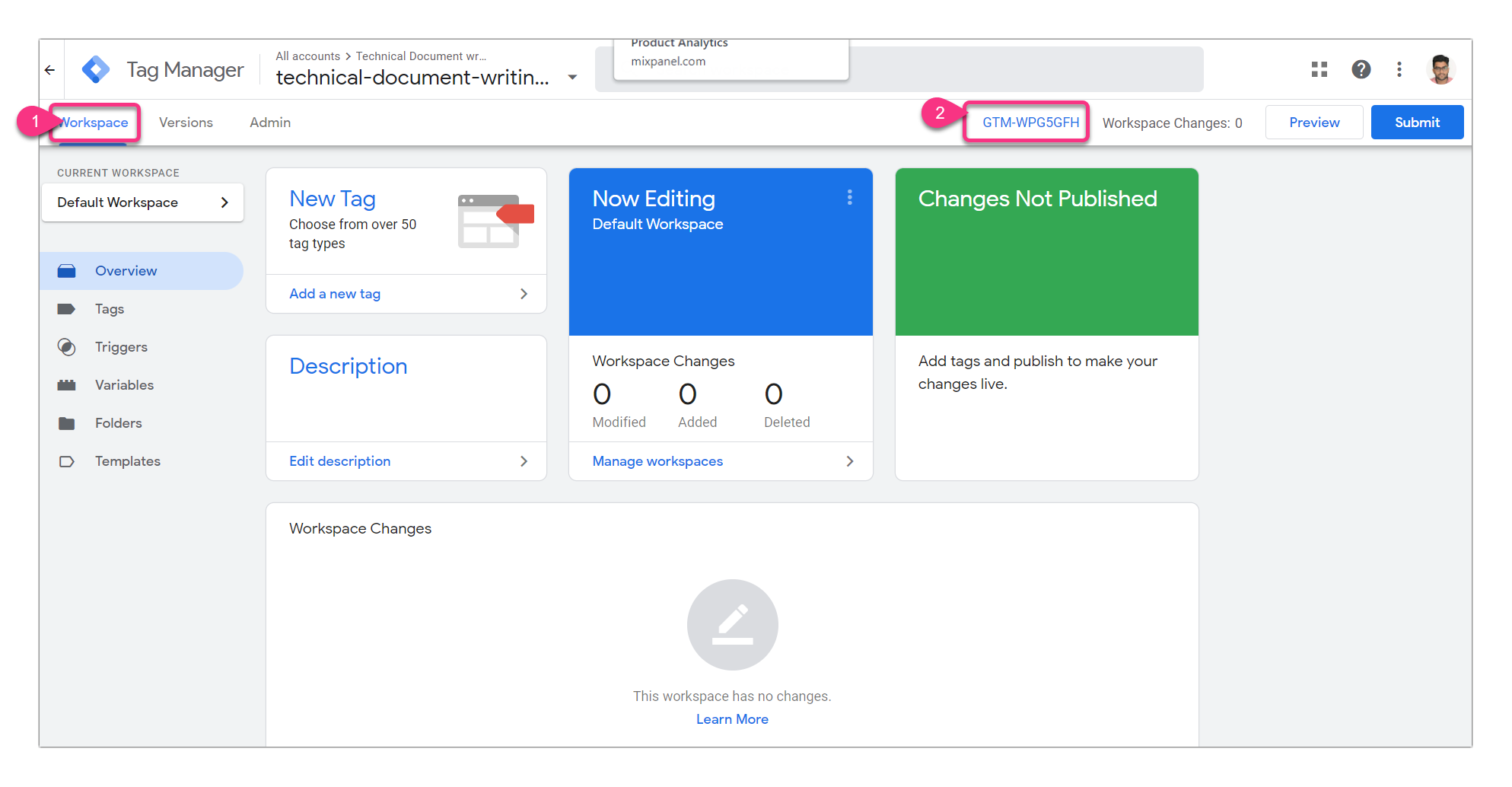
- Click Workspace. Your Container ID appears on the primary menu bar next to Workspace changes.
New Google Tag Manager user
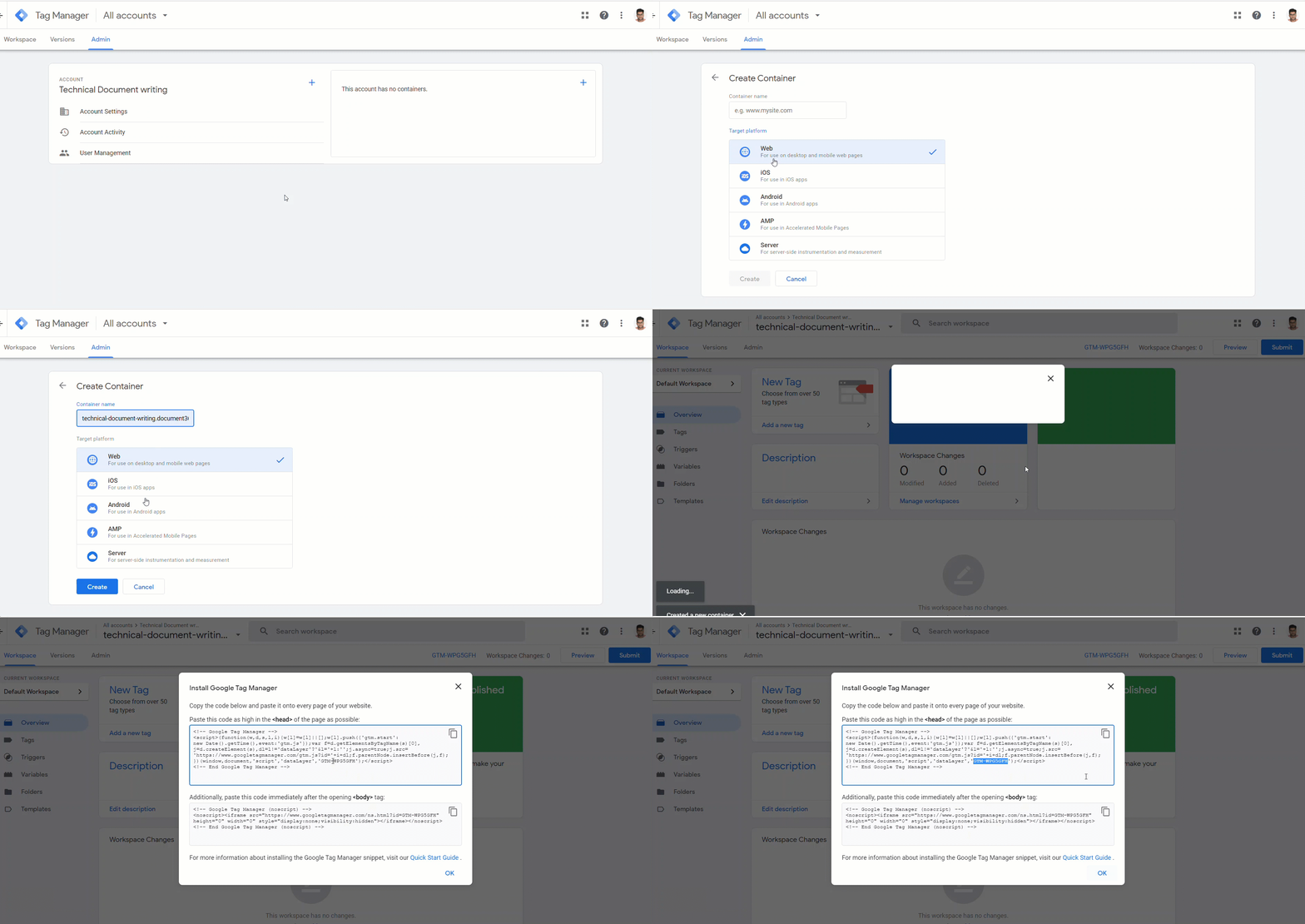
- After completing the initial GTM account setup, click Admin (next to versions in the primary menu) and add a Container name and Container platform.
- Copy the Container ID from the snippet in the Install Google Tag Manager popup.
Integrate Google Tag Manager with Document360
-
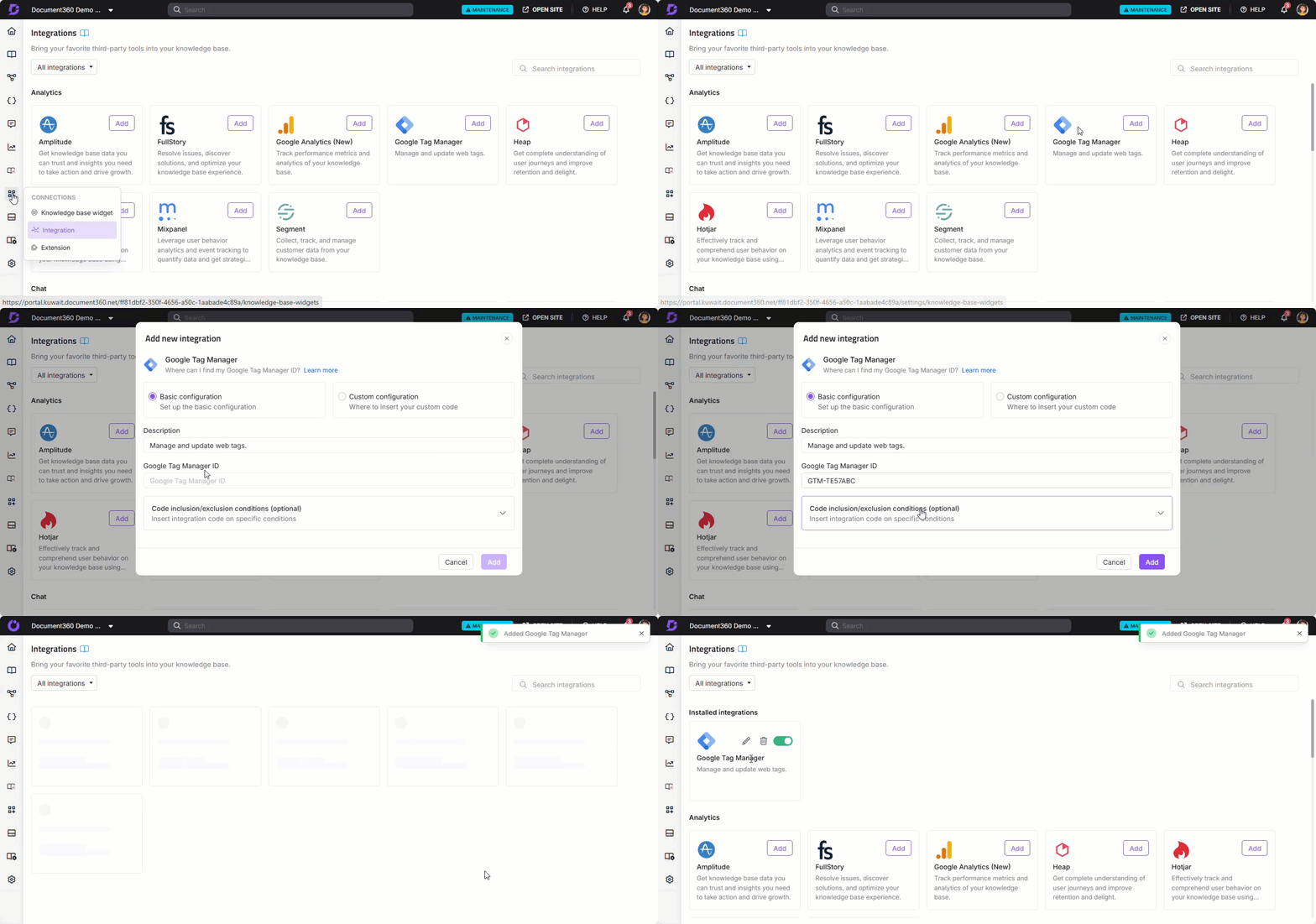
In the Document360 portal, navigate to Connections () > Integrations () in the left navigation bar.
-
Select Google Tag Manager from the list of integrations and click Add. The Add new integration panel appears.
-
Choose a configuration type:
Basic configuration: sets up a standard integration using your GTM Container ID.
- Description: enter a description for this integration.
- Google Tag Manager ID: enter your GTM Container ID.
NOTEThe Google Tag Manager ID is a unique code obtained from the GTM application. It is required to connect GTM and Document360 in the knowledge base portal.
Custom configuration: sets up an advanced integration with custom events added to a snippet code.
- Description: enter a description for this integration.
- Snippet code: paste your custom snippet code.
-
Optionally, expand Code inclusion/exclusion conditions to control when the integration runs based on IP address, Workspace, or Language.
-
Click Add.
After setup, open your Google Tag Manager account to view and manage your tags and code fragments deployed on your knowledge base site.
You can use the Google Tag Manager integration to update tags for conversion tracking, site analytics, remarketing, and more.
Best practices
- Use Basic configuration for standard tag deployment. Entering your GTM Container ID under Basic configuration is sufficient for most knowledge bases and lets you manage all tags from the GTM interface.
- Use Custom configuration when you need to deploy specific tag scripts directly. This is useful if you want to add event snippets or custom tag code that sits outside your standard GTM container.
- Manage all your tags through GTM rather than adding individual integrations. Once GTM is connected, you can deploy multiple third-party tools (analytics, ads, heatmaps) through GTM tags without adding each one as a separate integration in Document360.
- Use Code inclusion/exclusion conditions to exclude internal traffic. Add your office IP address as an exclusion so internal page visits do not affect your tag data.
- Test tag firing in GTM preview mode before publishing. Use GTM's built-in preview and debug mode to confirm that your tags are firing correctly on your knowledge base pages before making them live.
FAQ
What is the Google Tag Manager ID?
The Google Tag Manager ID (also called the Container ID) is a unique code obtained from your GTM account. It begins with GTM- and is required to connect GTM with Document360. You can find it in your GTM workspace on the primary menu bar next to Workspace changes.
What is the difference between Basic and Custom configuration?
Basic configuration connects GTM using your Container ID and deploys your GTM container on the knowledge base site. Custom configuration lets you paste a custom snippet directly, which is useful when you need to deploy specific tag scripts outside of your standard GTM container.
Why use Google Tag Manager instead of adding integrations directly in Document360?
Once GTM is connected to Document360, you can deploy and manage multiple third-party tools (analytics platforms, advertising pixels, heatmap tools) through GTM tags without returning to Document360 for each one. This gives your marketing team more flexibility to add and update tags independently.
Can I limit which workspaces or languages GTM runs on?
Yes. When adding or editing the GTM integration, expand Code inclusion/exclusion conditions and add conditions based on IP address, Workspace, or Language. See Code inclusion and exclusion conditions for full details.
How do I verify that Google Tag Manager is working on my knowledge base site?
Use GTM's built-in Preview mode to test tag firing before publishing. You can also right-click on your knowledge base site, select View page source, and search for your Container ID (beginning with GTM-) to confirm the script has been injected.