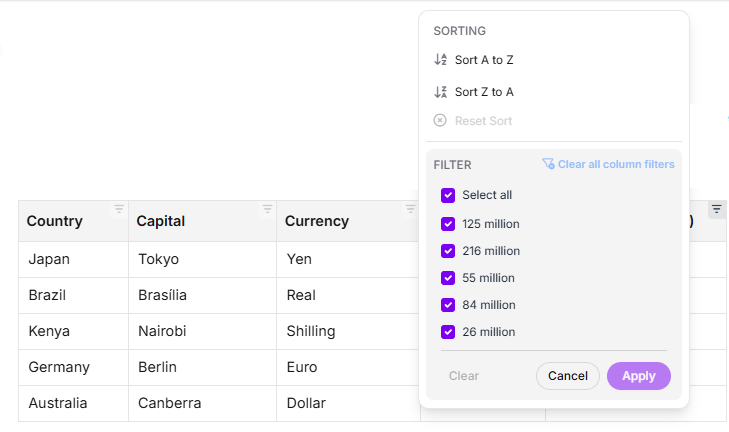
Adding sortable columns to your tables lets readers reorder table content by clicking any column header. Clicking a header once sorts ascending (▴); clicking again sorts descending (▾). The implementation requires two additions to your Custom CSS & JavaScript settings, a CSS snippet that styles the sort indicators, and a JavaScript snippet that handles the sort logic.
When to use sortable tables
- Reference tables with many rows: sorting lets readers quickly find the entry they are looking for rather than scanning the entire table.
- Comparison tables: readers can sort by any attribute (price, name, feature availability) to compare options on their own terms.
- Data-heavy articles: sorting reduces the need for readers to request a filtered or reordered version of the data.
This implementation applies to all tables across your Knowledge Base site. Sorting is triggered by the reader clicking any column header. The sort icon in the header indicates the current sort direction — ascending (▴) or descending (▾).
How to add sortable columns to tables
This requires two steps: adding the CSS for visual indicators, then adding the JavaScript for the sort logic.
Add the CSS
- In the Knowledge Base portal, go to Settings > Knowledge base site > Custom CSS & JavaScript.
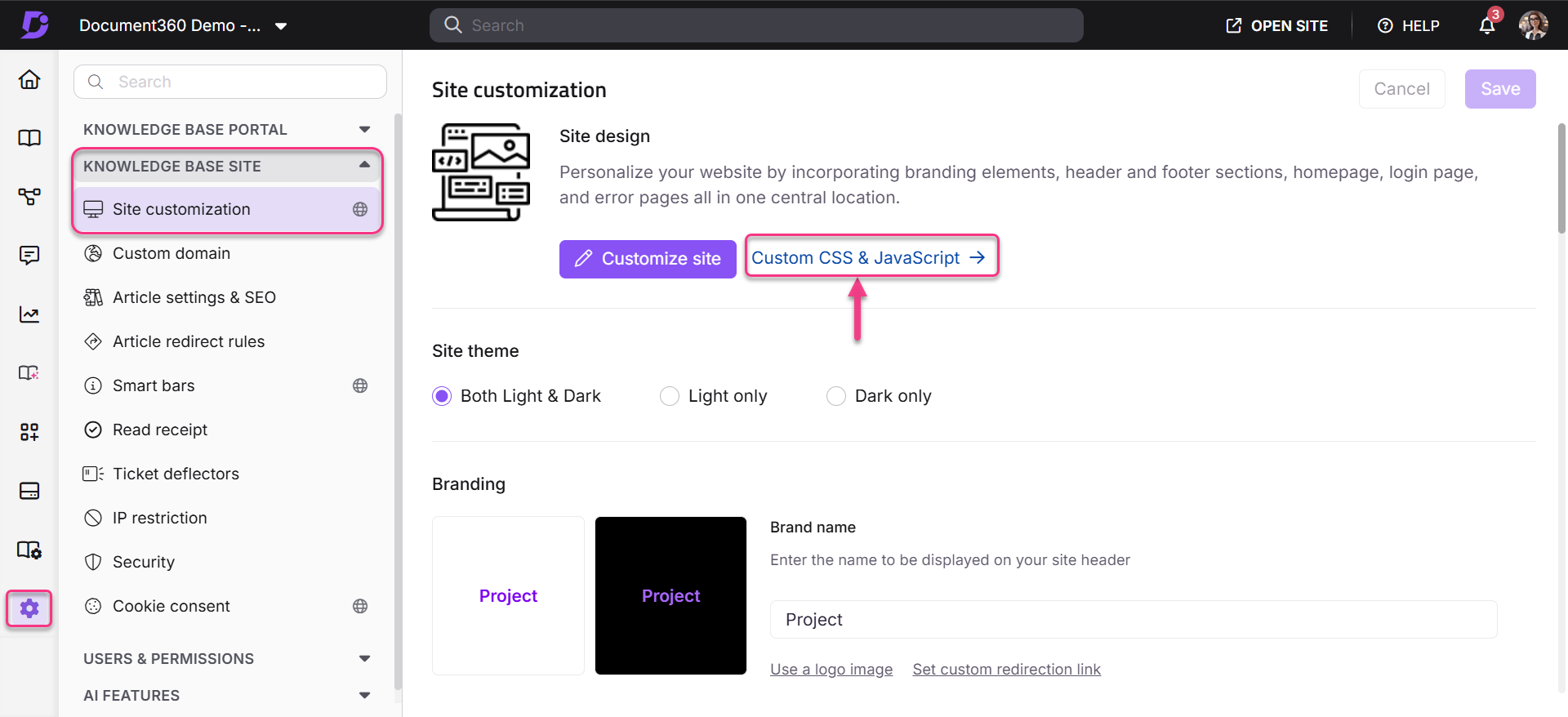
- Select the CSS tab and paste the following snippet:
table th {
    cursor: pointer;
}

table .th-sort-asc::after {
    content: "\25b4";
}

table .th-sort-desc::after {
    content: "\25be";
}

table .th-sort-asc::after,
table .th-sort-desc::after {
    margin-left: 5px;
}

table .th-sort-asc,
table .th-sort-desc {
    background: rgba(0, 0, 0, 0.1);
}
- Click Save.
Add the JavaScript
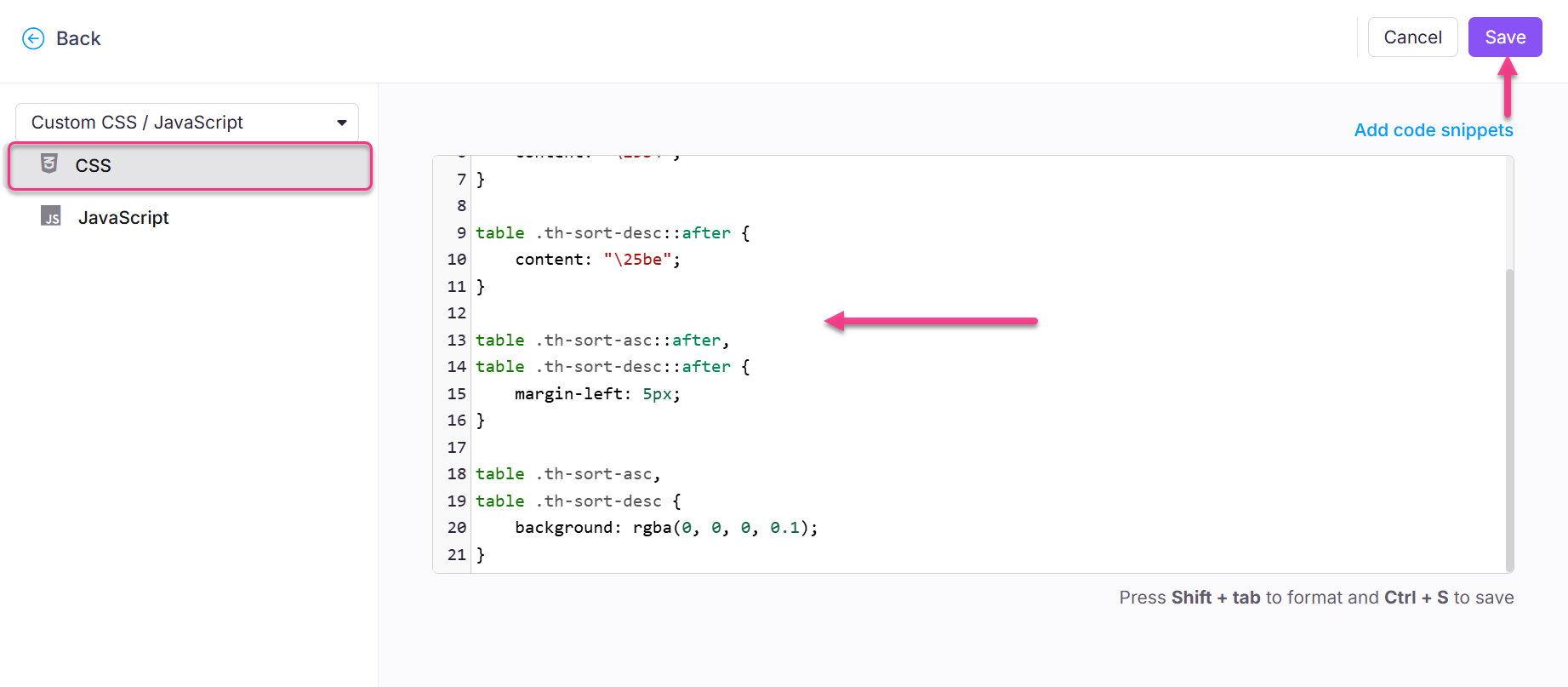
- In the same Custom CSS & JavaScript settings page, select the JavaScript tab.
- Paste the following snippet:
/**
 * Sorts a HTML table.
 *
 * @param {HTMLTableElement} table The table to sort
 * @param {number} column The index of the column to sort
 * @param {boolean} asc Determines if the sorting will be in ascending
 */
function sortTableByColumn(table, column, asc = true) {
    const dirModifier = asc ? 1 : -1;
    const tBody = table.tBodies[0];

    // Sort only data rows (rows with <td>), so the header row of <th> is not moved
    const rows = Array.from(tBody.querySelectorAll("tr")).filter(row => row.querySelector("td"));

    // Sort each row
    const sortedRows = rows.sort((a, b) => {
        const aColText = a.querySelector(`td:nth-child(${ column + 1 })`).textContent.trim();
        const bColText = b.querySelector(`td:nth-child(${ column + 1 })`).textContent.trim();

        // Compare as numbers when both values are numeric, otherwise compare as text
        const aNum = parseFloat(aColText.replace(/[^0-9.-]/g, ""));
        const bNum = parseFloat(bColText.replace(/[^0-9.-]/g, ""));
        const bothNumeric = aColText !== "" && bColText !== "" && !isNaN(aNum) && !isNaN(bNum);

        const result = bothNumeric ? (aNum - bNum) : aColText.localeCompare(bColText);
        return result * dirModifier;
    });

    // Re-add the newly sorted rows below the header row
    sortedRows.forEach(row => tBody.appendChild(row));

    // Remember how the column is currently sorted
    table.querySelectorAll("th").forEach(th => th.classList.remove("th-sort-asc", "th-sort-desc"));
    table.querySelector(`th:nth-child(${ column + 1})`).classList.toggle("th-sort-asc", asc);
    table.querySelector(`th:nth-child(${ column + 1})`).classList.toggle("th-sort-desc", !asc);
}

// Attach click-to-sort to every table; safe to run repeatedly
function initSortableTables() {
    document.querySelectorAll("table").forEach(table => {
        if (table.classList.contains("table-sortable")) return; // already set up
        table.classList.add("table-sortable");

        table.querySelectorAll("th").forEach((headerCell, headerIndex) => {
            headerCell.addEventListener("click", () => {
                const currentIsAscending = headerCell.classList.contains("th-sort-asc");
                sortTableByColumn(table, headerIndex, !currentIsAscending);
            });
        });
    });
}

// Run on first load
initSortableTables();

// Re-run whenever the reader opens another article (the site loads articles without a full page reload)
setInterval(initSortableTables, 1000);
- Click Save.
Outcome
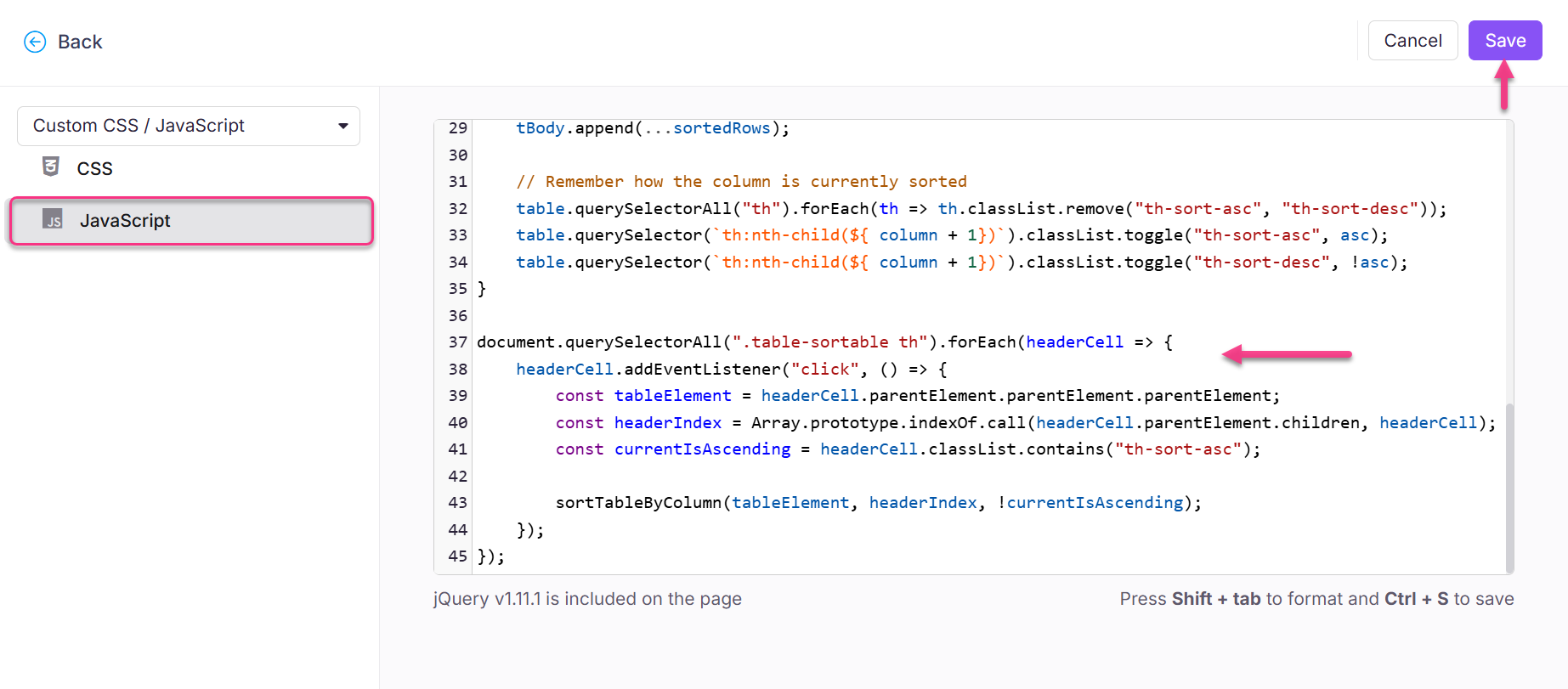
After saving both snippets, all table column headers on your Knowledge Base site become clickable. Clicking a header sorts the table rows by that column. A sort direction indicator appears in the active column header.