Adding tags to an article or category page makes them visible to readers on the knowledge base site and improves how the content surfaces in search results. Tags are applied from the article editor or during the publishing flow.
Tags must exist in your tag library before they can be applied to an article. If the tag you need does not exist yet, see Create new tag →
When to use tags
- Add tags to an article when you want readers to find it alongside other articles that cover the same topic across different categories.
- Add or update tags during the publish flow to ensure the article goes live with the correct tags applied.
- Add tags to category pages to improve their discoverability in knowledge base search and on external search engines.
Add tags to an article
The primary method is from the article editor.
- Open the article in the knowledge base portal.
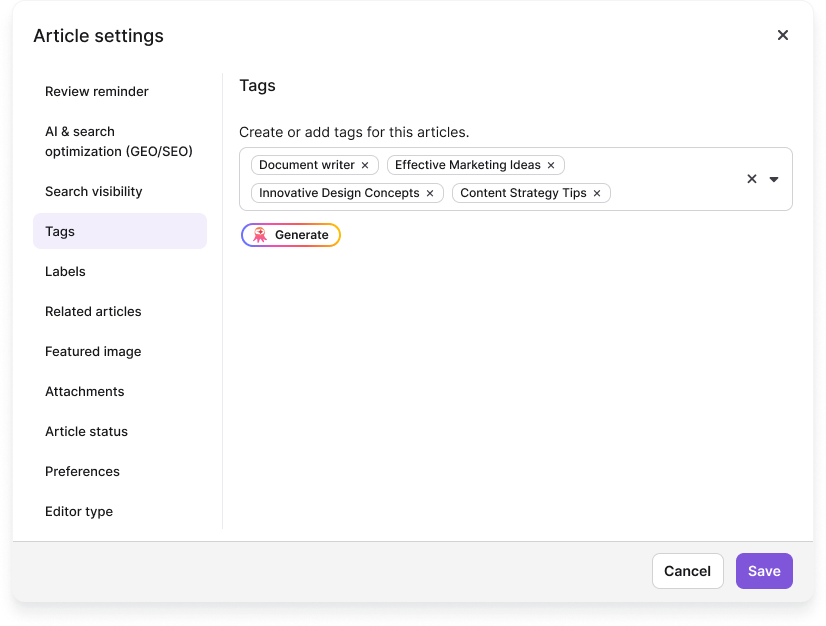
- Click the More () icon in the article header and select Tags. The Article settings panel opens on the Tags tab.
- Click the Tags field to open a dropdown of existing tags. Type to search; the dropdown filters as you type.
- Select the tag you want to apply.
If the tag does not exist in your library, type the tag name and click Add tag. Learn more at Create new tag{target=_blank}.
- Alternatively, click Ask Eddy AI to generate AI-suggested tags based on the article content. Select the appropriate tags from the suggestions.
The article must have at least 50 words for Ask Eddy AI to be available. Learn about AI tag recommender →
- Click Save.
Add tags during publishing
You can also add or update tags when publishing an article from the publish confirmation prompt.
- Click Publish in the article header.
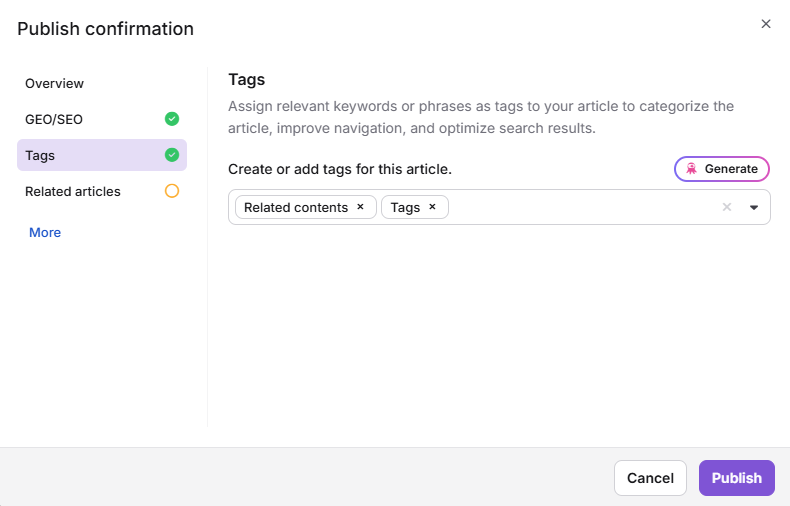
- In the confirmation prompt, select the Tags section.
- Add or remove tags as needed. Alternatively, click Generate to use Eddy AI to suggest relevant tags.
- Click Yes to publish the article.
View tags on the knowledge base site
Once tags are added to an article or category page and the article is published, tags appear on the knowledge base site below the article title. Tags display in numerical order first, followed by alphabetical order.
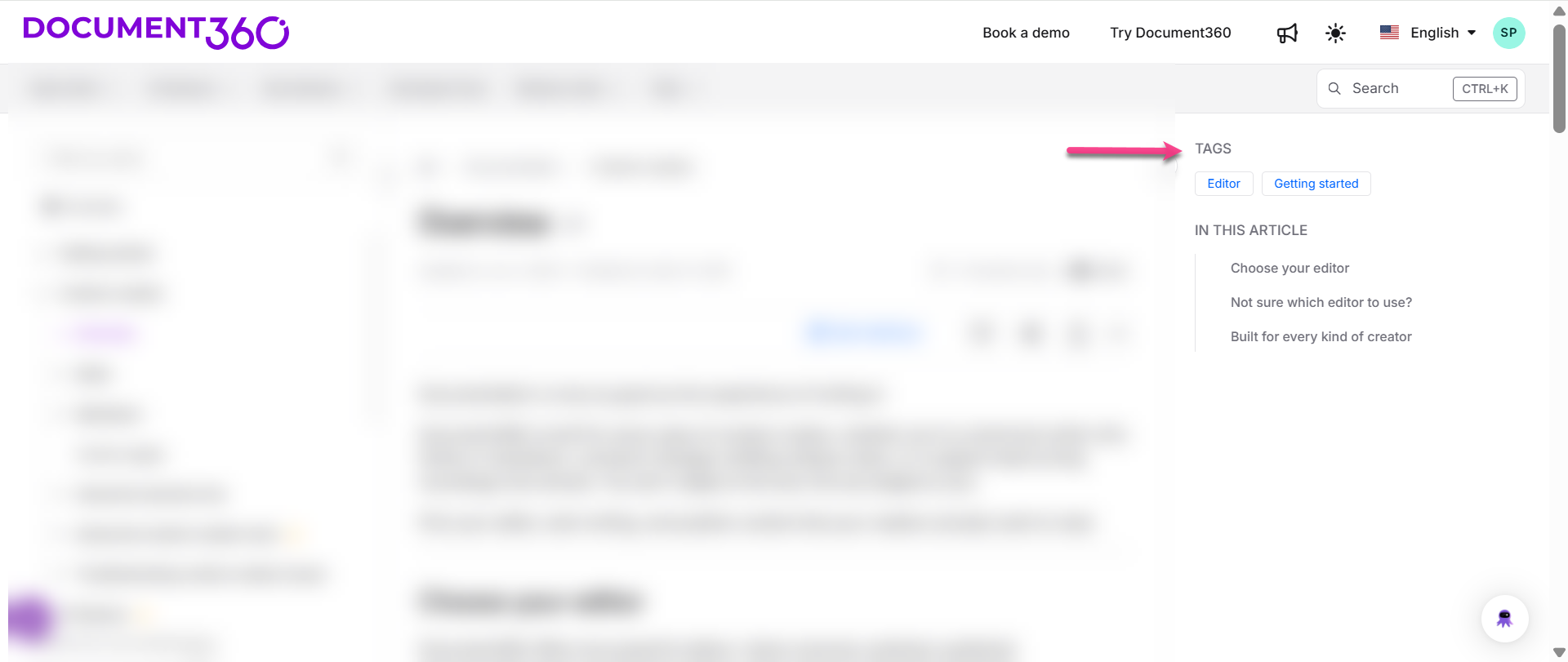
Readers can click a tag to see a list of all articles and category pages associated with that tag.
Best practices
- Apply tags before publishing. Use the publish confirmation flow to do a final tag check as part of your publishing process.
- Limit tags to two to four labels that most accurately represent the article's core topics. Applying too many tags dilutes their value for readers.
- Use the same tags across related articles in different categories so readers can discover them together from the tag page on the knowledge base site.
FAQ
Do tags appear on the knowledge base site immediately after saving?
No. Tags are visible on the knowledge base site only after the article is published. Adding tags to a draft article saves them to the article settings but they do not appear to readers until the article goes live.
Can I add tags to a draft article before publishing?
Yes. Tags can be added to articles in any status: draft, published, or unpublished, from the Article settings panel. They appear on the knowledge base site only after the article is published.
Can I add tags to category pages as well as articles?
Yes. Tags can be applied to both articles and category pages. The process is the same: open the category page, click the More () icon, select Tags, and apply the tags.
How many tags can I add to a single article?
There is no strict limit on tags per article. Document360 recommends applying a reasonable number of tags that accurately represent the main themes of the content, typically two to four.
Can readers search for articles using tags on the knowledge base site?
Yes. Readers can click any tag on an article page to see all articles and category pages associated with that tag. Tags also improve search relevance. Articles with relevant tags surface more accurately when readers search for those topics.